Mines is a captivating game that challenges players to reveal safe tiles on a grid while avoiding hidden mines. Success in this game depends heavily on your ability to analyze the Mines game grid and understand the board’s layout. Developing strong grid analysis skills can elevate your gameplay, allowing you to make informed, strategic decisions that increase your chances of winning.
In this article, we explore the essential techniques for Mines game grid analysis, explain how to interpret the board effectively, and provide practical strategies to improve your spatial awareness during gameplay. Whether you are a beginner or looking to sharpen your skills, mastering board reading is fundamental to gaining an edge in Mines.
The Structure of the Mines Game Grid
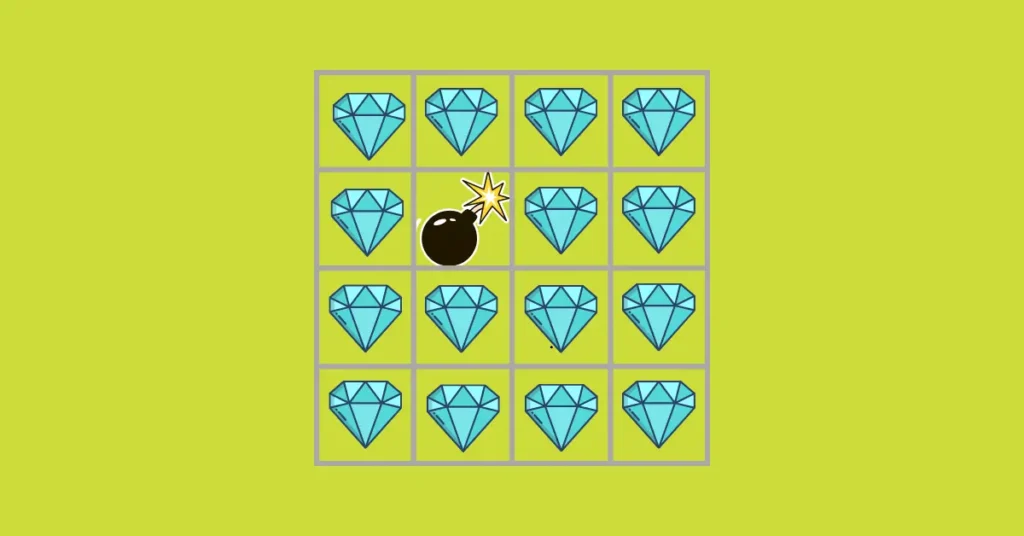
The Mines game grid consists of a fixed number of squares arranged in rows and columns. Each game round starts with the mines randomly hidden under some of these squares, while the remaining tiles are safe to click. The player’s objective is to reveal safe tiles without triggering a mine.
Understanding the grid’s structure is the first step in improving your gameplay. Common grid sizes include 5×5, 7×7, or larger, with the number of mines varying according to the difficulty level. A higher density of mines increases the game’s risk and requires a more cautious approach.
The placement of mines is randomized but follows a provably fair algorithm on most reputable platforms. This means every game is statistically independent, but patterns and probabilities on the grid can still guide your decisions.
How to Analyze the Grid Effectively
Grid analysis involves assessing the current game board, calculating risk probabilities, and making decisions based on observed patterns. Since Mines is a game of chance mixed with skillful choice, being able to read the board can tip the balance in your favor.
One crucial part of grid analysis is identifying safe zones. Early in the game, it is impossible to know for certain where mines are located, but certain parts of the grid statistically have a lower probability of containing mines. For example, corner tiles and edges may sometimes present safer starting points depending on the grid size and mine density.
As the game progresses and more tiles are revealed, you gain additional information. Paying close attention to the number of safe tiles uncovered versus the number of remaining mines can help you gauge risk for the next move.
The Role of Probability in Board Reading
Every uncovered safe tile changes the probability landscape of the board. The fewer the remaining safe tiles, the higher the risk with each subsequent pick. By calculating the ratio of uncovered tiles to total tiles and mines, you can better estimate the chances of hitting a safe square.
Players who perform grid analysis tend to focus on the balance between risk and reward. For instance, in earlier rounds, it might make sense to uncover multiple tiles quickly, as the risk of hitting a mine is lower. In later rounds, however, when fewer safe tiles remain, careful selection and sometimes conservative play become necessary.
While Mines does not provide numeric hints like Minesweeper, understanding these probabilities helps you avoid reckless clicks and enhances your decision-making.
Spatial Awareness and Pattern Recognition
Improving your spatial awareness allows you to detect subtle clues in the layout of revealed tiles. Even though Mines relies heavily on randomness, experienced players learn to spot emerging patterns that can influence their next move.
For example, clusters of safe tiles surrounded by unexplored squares might suggest certain adjacent squares are safer than others. Conversely, isolated safe tiles can indicate potential mine-heavy areas nearby.
With practice, you will begin to recognize common board shapes that hint at where mines are less likely to be placed. This pattern recognition skill is an invaluable asset, allowing you to make more confident choices during high-pressure moments.
Advanced Grid Analysis Techniques
Beyond basic observation and probability calculations, advanced players use more systematic approaches to grid analysis. Some employ mental or physical note-taking methods, tracking revealed tiles and counting remaining mines to plan moves several steps ahead.
Others adopt betting strategies that complement their grid reading skills. For example, progressive betting patterns may be used to capitalize on low-risk boards while limiting losses during risky rounds.
Another sophisticated technique involves studying previous game histories, when available, to identify any recurring board tendencies or algorithm quirks that could be exploited.
Table: Example Probability Shifts Based on Tiles Revealed
| Tiles Revealed | Remaining Safe Tiles | Remaining Mines | Approximate Risk per Click (%) |
|---|---|---|---|
| 5 | 20 | 5 | 20 |
| 15 | 10 | 5 | 33 |
| 25 | 0 | 5 | 100 |
This table illustrates how the risk of hitting a mine increases as the game progresses and fewer safe tiles remain on the board. Understanding these shifts helps you make smarter, risk-adjusted decisions.
Practicing Board Reading Skills
Like any skill, improving your Mines game grid analysis requires consistent practice. Many online platforms offer free play modes where you can experiment with different grid sizes and mine densities without risking real money.
Start by focusing on smaller grids and gradually move to larger, more complex boards as you become comfortable. Pay attention to how the board changes with each tile you reveal and try to verbalize or mentally note your reasoning for each move.
Over time, this process trains your brain to better interpret the spatial layout and probability changes, turning intuition into reliable strategy.
Conclusion
Mastering the Mines game grid is essential for any player seeking to improve their success rate. By understanding the board’s structure, employing probability analysis, enhancing spatial awareness, and practicing advanced techniques, you gain the tools needed to make informed decisions.
While luck plays a role, skillful grid analysis can significantly reduce risks and increase winnings in Mines. The key is patience, observation, and strategic thinking—qualities that separate casual players from true experts.
Whether playing for fun or aiming for consistent profits, focusing on board understanding is a foundational step on your Mines journey. With these insights, you can approach each round with greater confidence and sharper decision-making.
Must read: